Mozambique Safari & Beach Holidays
Mozambique is one of Africa’s least-visited safari destinations. That’s not a problem to work around. It’s the point.
Best Mozambique Safari Tours and Tailor-Made Itineraries
Gorongosa bush and beach - Mozambique
From £7,625per person












Why Book with Us





Speak to an expert
We love designing African adventures. Get in touch and we can help you create yours.
Email: adventure@wild-paths.co.uk or send us a WhatsApp on +447568161707


Mozambique Accommodation
Our Mozambique properties range from Gorongosa’s expedition camps — two of them, each showing a different side of the park — to private beach villas on the Bazaruto Archipelago. Small, carefully chosen, and all operating with a genuine conservation purpose.
No accommodations for this destination yet.
What We Love About Mozambique
Bush, coast and beyond
Few countries offer such a clean contrast in one trip. You can move from Gorongosa’s floodplains to a private beach villa on the Bazaruto Archipelago in a single day. Or extend a Southern Africa safari to the dive sites at Tofo or the empty beaches of Machangulo. The geography works in your favour.
Marine life worth diving for
The waters off Mozambique’s coast are exceptional. Tofo is one of the best places in the world to swim with whale sharks and manta rays. Humpback whales move through between June and November. The reefs around Bazaruto are largely intact and the snorkelling and diving are as good as the Indian Ocean gets.
Best time to visit to Mozambique
April to November suits both bush and coast. July to September offers the best wildlife viewing at Gorongosa and humpback whale sightings along the coast. The shoulder months of April to June and October to November are quieter, often better value, and excellent across all destinations. The wet season brings drama and good birdwatching for those who don’t mind the heat.
Mozambique FAQs
We answer a few common questions we often receive. Please just get in touch if anything you want to know isn’t answered below.
Is Mozambique a good safari destination?

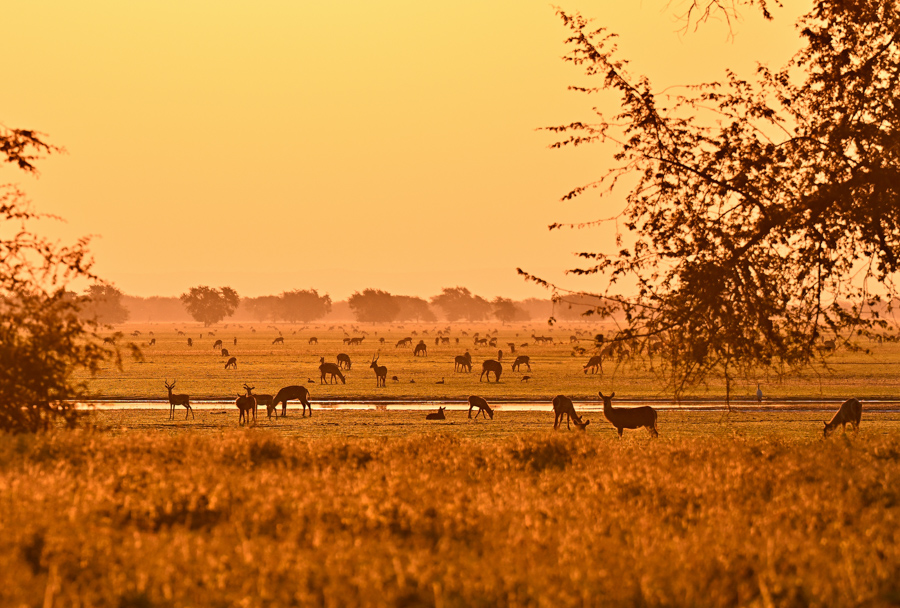
Gorongosa alone makes the case. The park holds one of the largest waterbuck populations on the continent, alongside elephant, buffalo, wild dog, lion and hippo — all abundant in numbers that would have seemed impossible thirty years ago. The biodiversity runs deeper than the big species: scientists are still documenting what’s here. And for pangolin, it’s one of the best places in Africa — the Pangolin Guardians programme gives you access that simply doesn’t exist elsewhere. Add the Indian Ocean coast and you have a destination that covers serious ground.
Is Mozambique safe to visit?
The areas we work in — Gorongosa, the Bazaruto Archipelago, Vilanculos, Machangulo and Tofo — are well-established for tourism and safe to visit. Mozambique is a large country and the security situation varies by region; the north, in particular, has areas we don’t currently feature. We’ll always give you a clear-eyed picture of what’s involved before you travel.
Where is the best place to see pangolin in Africa?
Gorongosa is one of the best answers on the continent. The Pangolin Guardians programme has been running since 2019, rehabilitating animals intercepted from poachers and releasing them back into the park. Guests staying five nights or more can join the daily foraging walks with the programme’s veterinarians — moving through the park with pangolins being prepared for release. It’s a genuinely rare experience, and one that connects directly to the conservation work that makes Gorongosa what it is. We also work with closely with Lapalala Wilderness in South Africa, home to the world’s first purpose-built pangolin rehabilitation centre.
Can I combine a Mozambique safari with a beach holiday?
It’s one of the things Mozambique does particularly well. Our featured Bush & Beach itinerary moves from five nights at Gorongosa to five nights at Azura Marlin Beach on the Bazaruto Archipelago — connected by helicopter over the islands. There are also lower priced beach options rather than Azura Marlin which offer great spots to relax. We’re also building further combinations that bring in Tofo and Machangulo, and can extend itineraries from South Africa or Zimbabwe for clients already in the region.
When is the best time to visit Mozambique?
April to November is the main season and works for both bush and coast. July to September is peak for Gorongosa — the dry season concentrates wildlife around water and makes game viewing more predictable. Humpback whales are along the coast from June to November. The shoulder months either side offer good conditions and tend to be quieter and better value. The wet season from December to March brings heat, rain and exceptional birdwatching at Gorongosa.
How do I get to Mozambique?
Most clients fly into Johannesburg and connect from there. For Gorongosa, the connection is to Beira with Airlink, then a seat-in charter directly into the park. For Vilanculos and the Bazaruto Archipelago, direct connections run from Johannesburg and Maputo. For Tofo, Inhambane is the nearest airport, again via Johannesburg or Maputo. We handle all routing advice and can include international flights in the package if needed.
Mozambique Regions
Gorongosa National Park
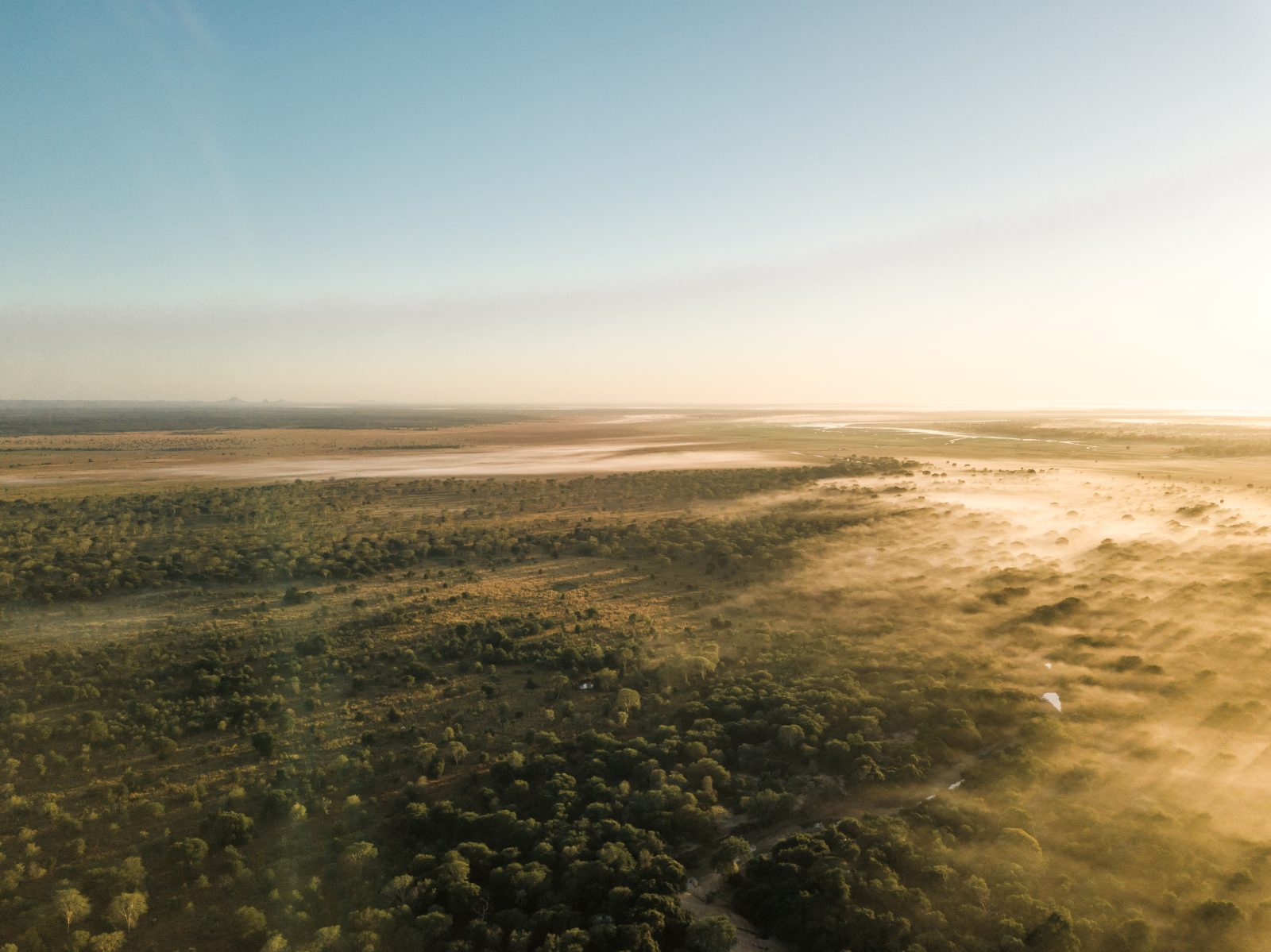
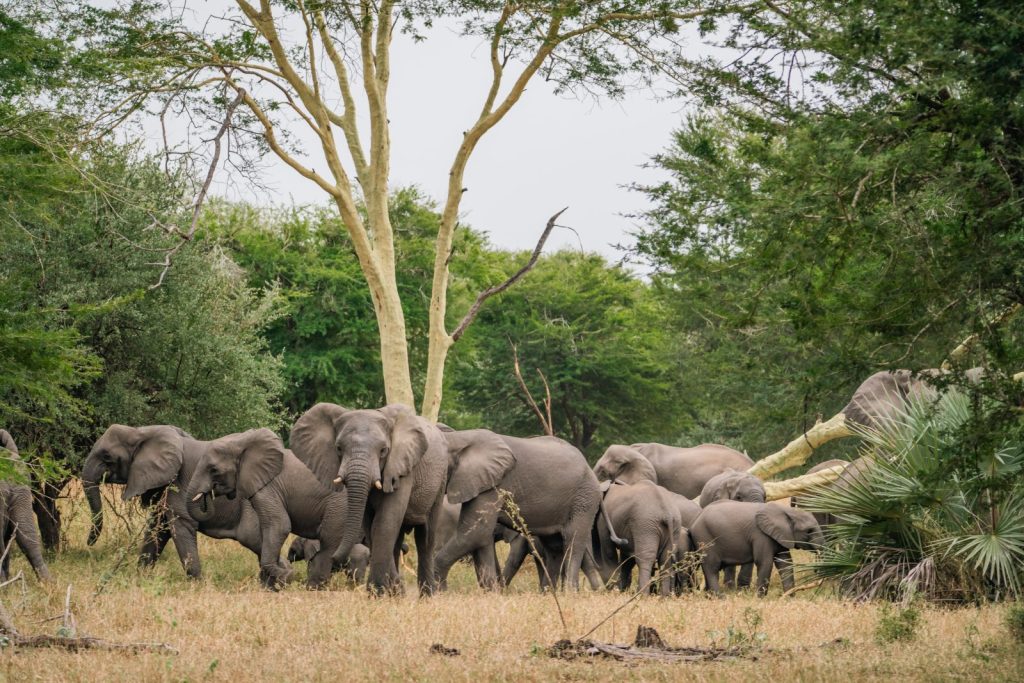
Gorongosa was close to destroyed by Mozambique’s civil war. What’s happened since is one of the most compelling conservation stories on the continent. Wildlife numbers that looked impossible thirty years ago are now on record — 873 elephants, more than 65,000 waterbuck, ten keystone species reintroduced. The park runs one of Africa’s most active open-air research stations and employs 1,600 people, 98 per cent of them Mozambican. It’s also one of the best places in Africa to see pangolin in the wild, through the Pangolin Guardians programme. Self-drive isn’t permitted. There are no vehicle convoys. When you find something, you find it properly.
Bazaruto Archipelago
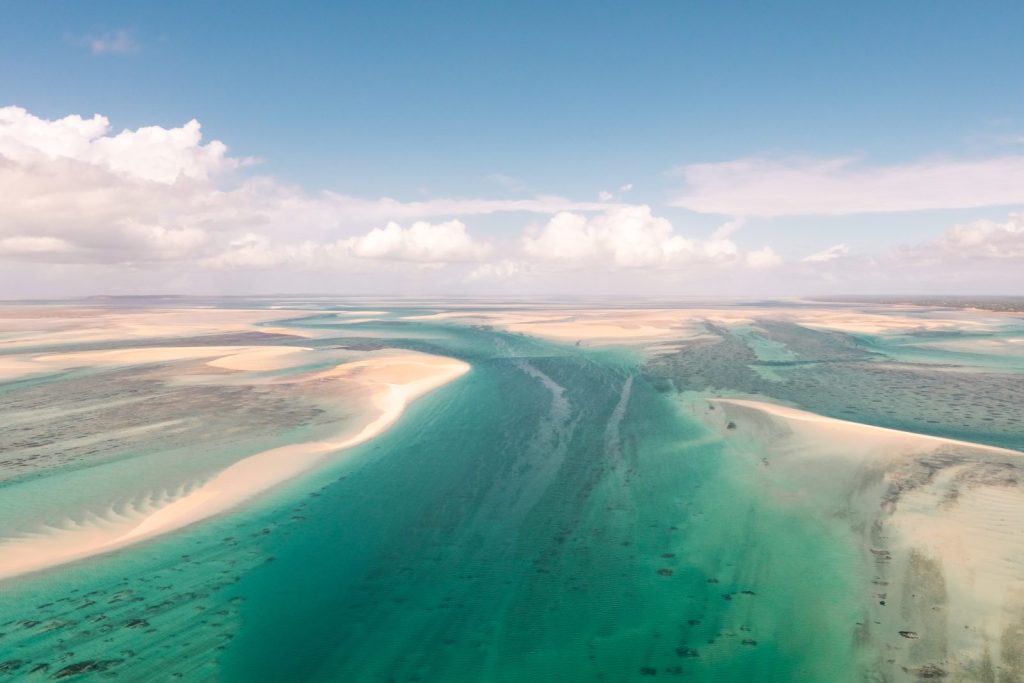
A chain of islands in the southern Indian Ocean, protected as a national park and home to some of the best snorkelling and diving in the region. The reefs are largely intact. Dugong still live here — one of only a handful of viable populations remaining in East Africa. Benguerra Island is where most visitors base themselves. Azura Marlin Beach sits directly on the ocean with private villas facing the water. The archipelago is accessible by helicopter from Vilanculos, and the transfer is part of the experience. This is the beach half of a Mozambique conservation safari and beach combination.
Vilanculos
Vilanculos is the mainland gateway to the Bazaruto Archipelago — a small coastal town with a working harbour, dhow-lined beaches and a relaxed pace that feels nothing like a resort. Some guests pass through on their way to the islands, but they’re some beautiful options on the mainland to stay for your beach break. The town has its own character: local restaurants, a colourful fish market, and views across to Benguerra and Bazaruto on a clear day. Flights connect from Johannesburg and Maputo. Helicopter transfers to the islands leave from here.
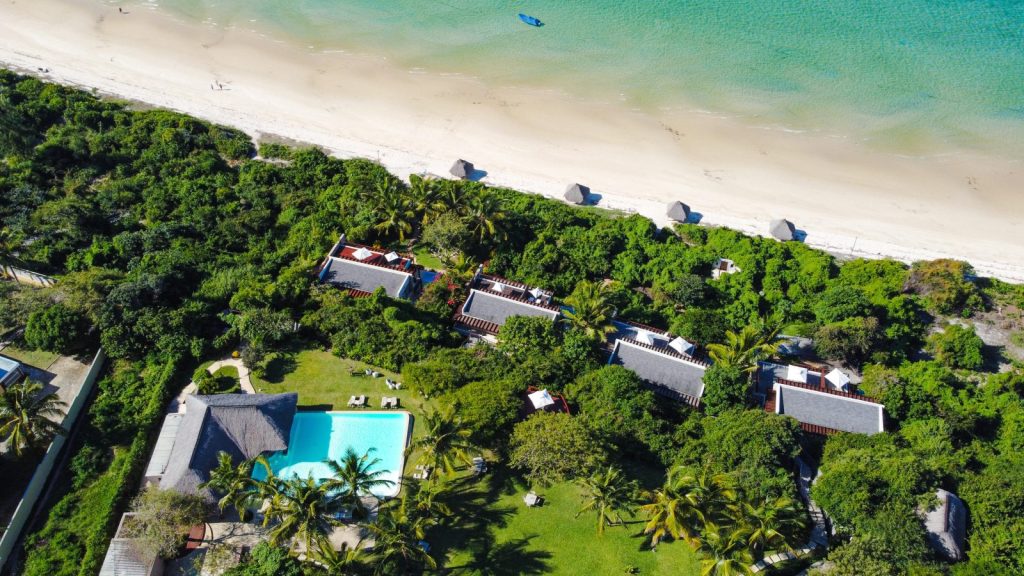
Machangulo
Machangulo sits on a long, wild peninsula south of Maputo — largely undiscovered and barely touched by tourism. The beaches here are among the most beautiful in southern Africa: wide, empty and backed by forest. It works well as a beach extension from South Africa, or as a quiet, off-grid destination for travellers who want something genuinely remote. The peninsula has a raw, unhurried quality that’s increasingly rare. We’re developing itineraries here and will have more detail soon. If this kind of place appeals to you, get in touch.
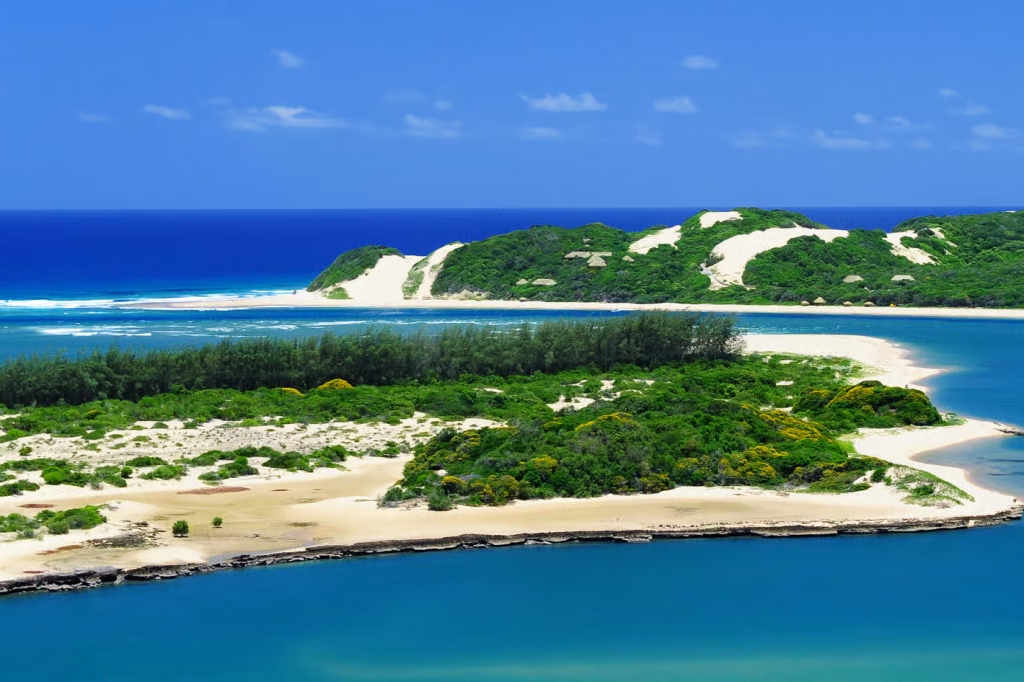
Tofo
Tofo, near Inhambane on Mozambique’s southern coast, is one of the world’s great dive destinations. Whale sharks are present year-round. Manta rays congregate between October and March. Humpback whales pass through from June to November. The reef diving is exceptional and the town has a relaxed, unpretentious energy that’s rare in beach destinations. For serious divers or anyone who wants their ocean experience to go well beyond lying on a beach, Tofo belongs on the list. It also works as a standalone trip or combined with a Southern Africa safari extension.


Our Impact
We choose our local partners, safari camps and guides based on their ability to offer incredible experiences and their commitment to people, the planet, and wildlife. We’ve worked with many of them for years.
- Every holiday we create aligns with our purpose to support conservation through the power of travel
- We measure the carbon cost of each trip and invest in projects that remove emissions and celebrate the wild
- 30% of profits are donated to charities, supporting conservation, communities and biodiversity.