
The world’s first wheelchair-accessible mobile safari

The Problem
I’ve spent the better part of my career in the safari industry, and for most of that time I carried a quiet discomfort about something the industry rarely talked about openly: if you use a wheelchair or have a mobility impairment, a genuine bush safari was largely out of reach. Accessible lodges existed, and to their credit, some operators would attempt to accommodate wheelchair users. In practice, however, this often meant manually lifting guests into standard game drive vehicles — an approach that is undignified, frequently unsafe, and for many guests simply not a medical option.
The problem wasn’t a lack of goodwill. It was a lack of genuine solutions.Yet the raw, unfiltered experience of being truly in the wild — camping under canvas with lions roaring in the darkness and elephants drifting past the fire, boarding a vehicle entirely on your own terms, in your own chair — had never really been possible for wheelchair users. That is, until I met Mike and Silvia Hill of Endeavour Safaris in Botswana.
The Solution
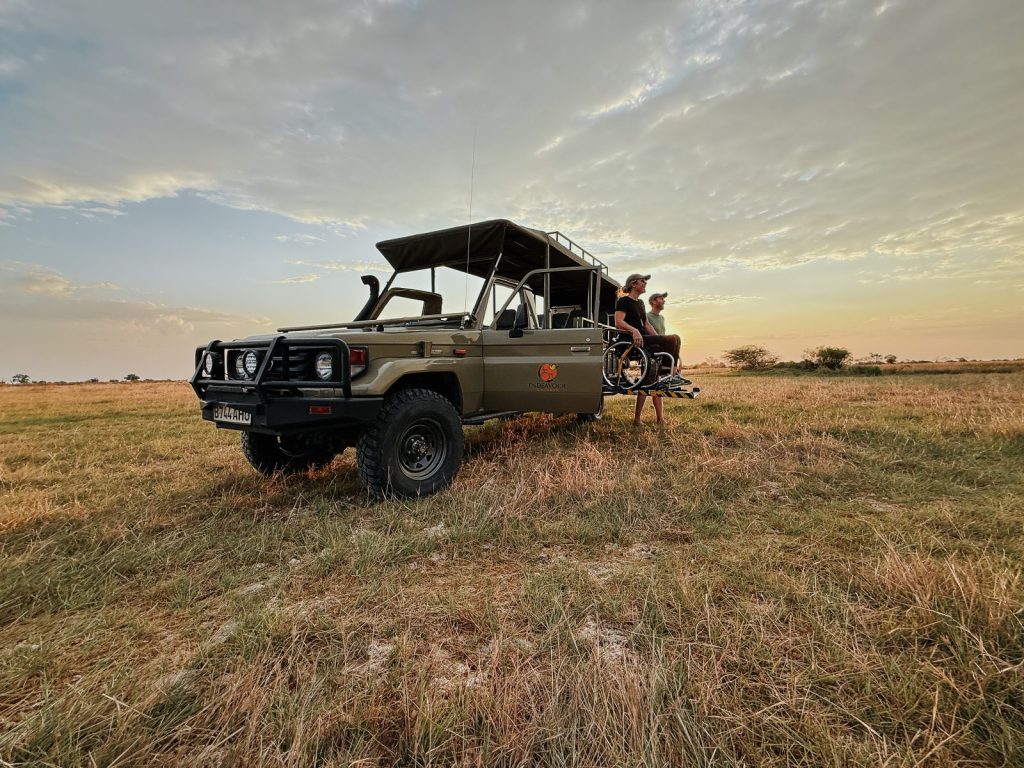
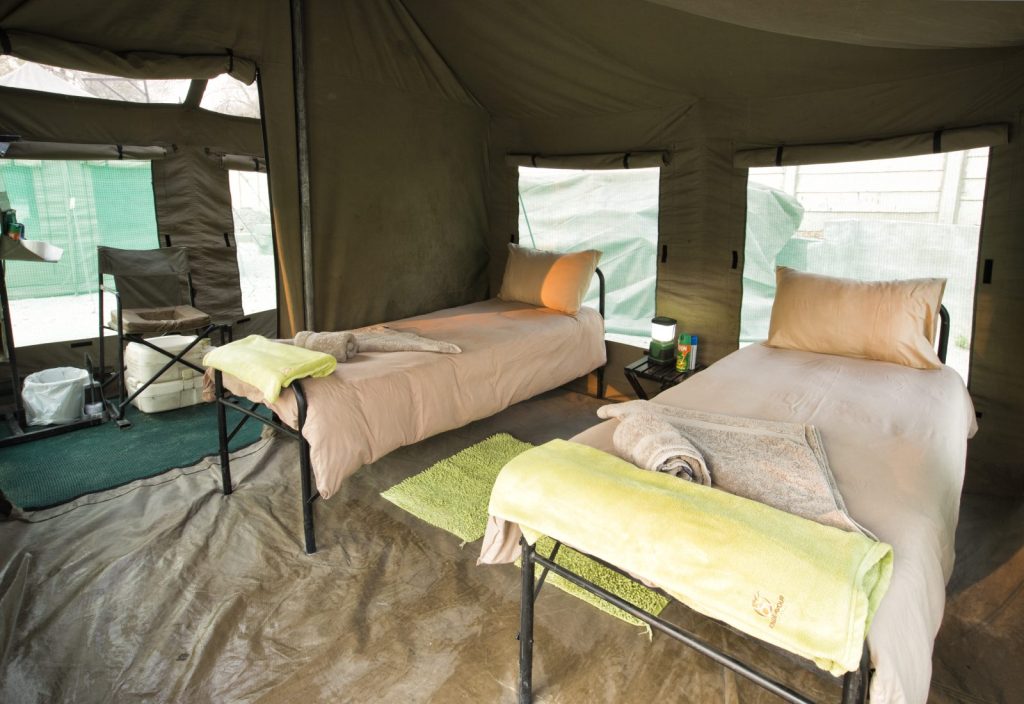
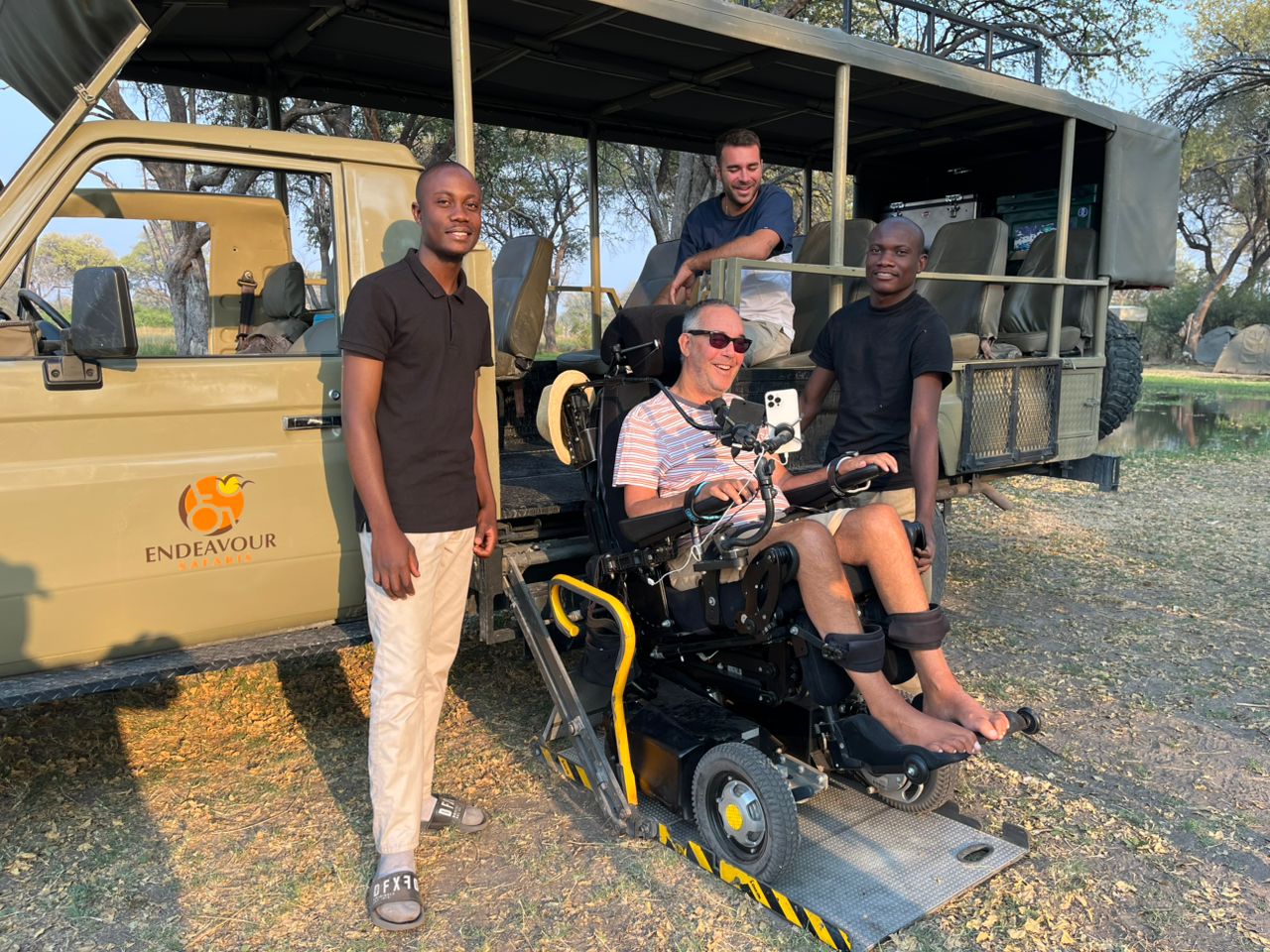
A friend in Botswana introduced me to them. From the moment I sat down with Silvia, I knew I’d found something remarkable. Mike and Silvia have spent twenty years quietly solving a problem. The rest of the safari industry hadn’t even tried to tackle it. Their adapted game drive vehicle carries a hydraulic lift and four-point wheelchair restraints. This allows wheelchair users and guests with mobility impairments to stay in their chairs throughout game drives. The fully serviced mobile camp reflects the same attention to detail. Roll-in showers, raised beds, grab rails, wide turning spaces, matting paths laid across the sand. They have left nothing to chance. When I found them, I didn’t think twice. I wanted to build something around what they’d created.
The Test
The person I most wanted to show it to was Sophie Morgan. Sophie is a BAFTA-nominated TV presenter, disability rights advocate, and one of the most experienced accessible travellers in the world. I’d met her through the Conscious Travel Foundation. I’m a member and Sophie is a mentor, and she’d given me enormous insight and support as I was developing Wild Paths’ range of adapted safaris. She was the perfect person to put this to the test.
I won’t pretend I wasn’t nervous. Someone of Sophie’s experience and profile joining a trip I’d helped shape was a significant moment.
Our Trip
But from the minute we met at Maun Airport and we headed out into the Moremi Game Reserve, any nerves dissolved.
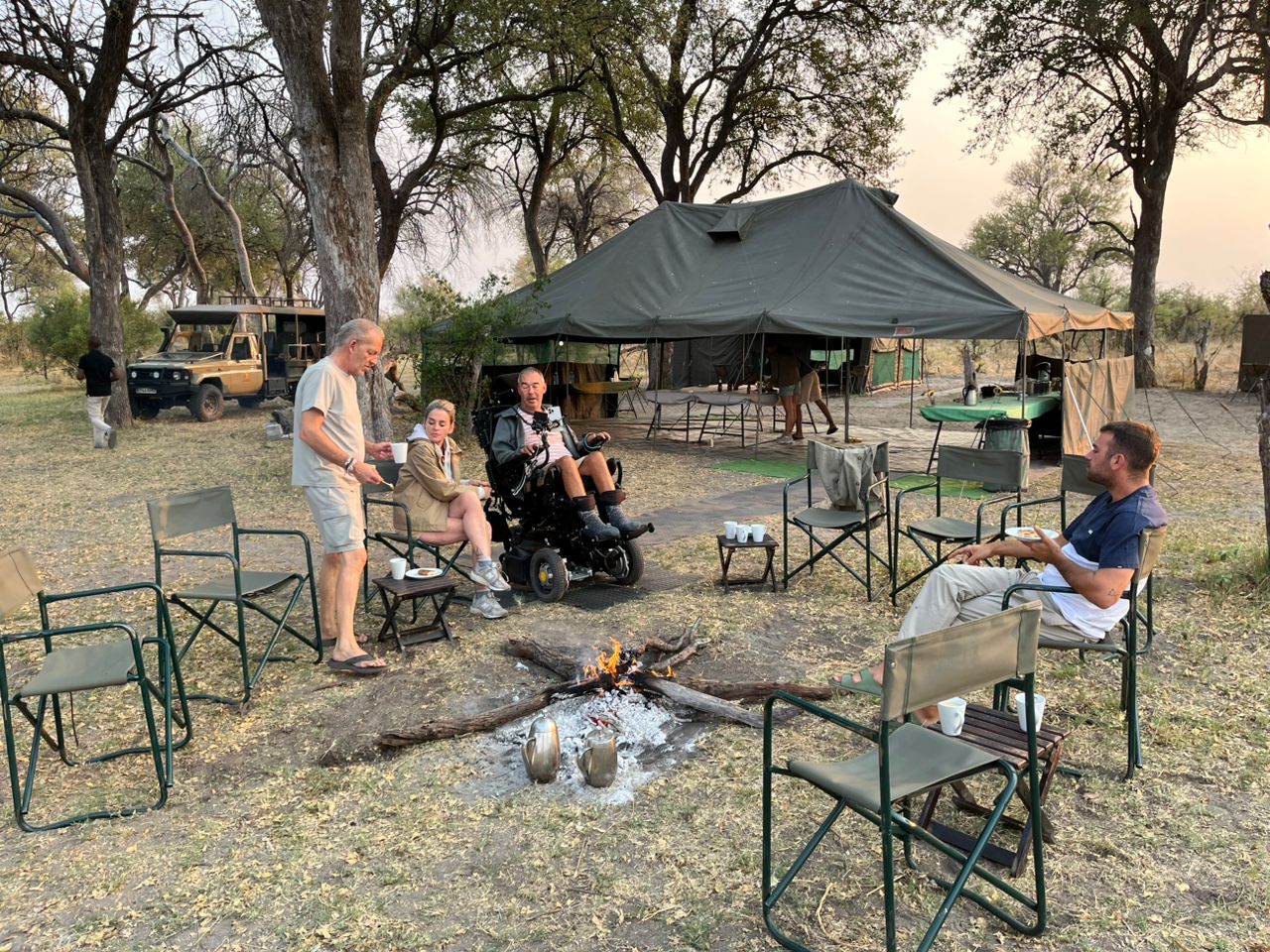
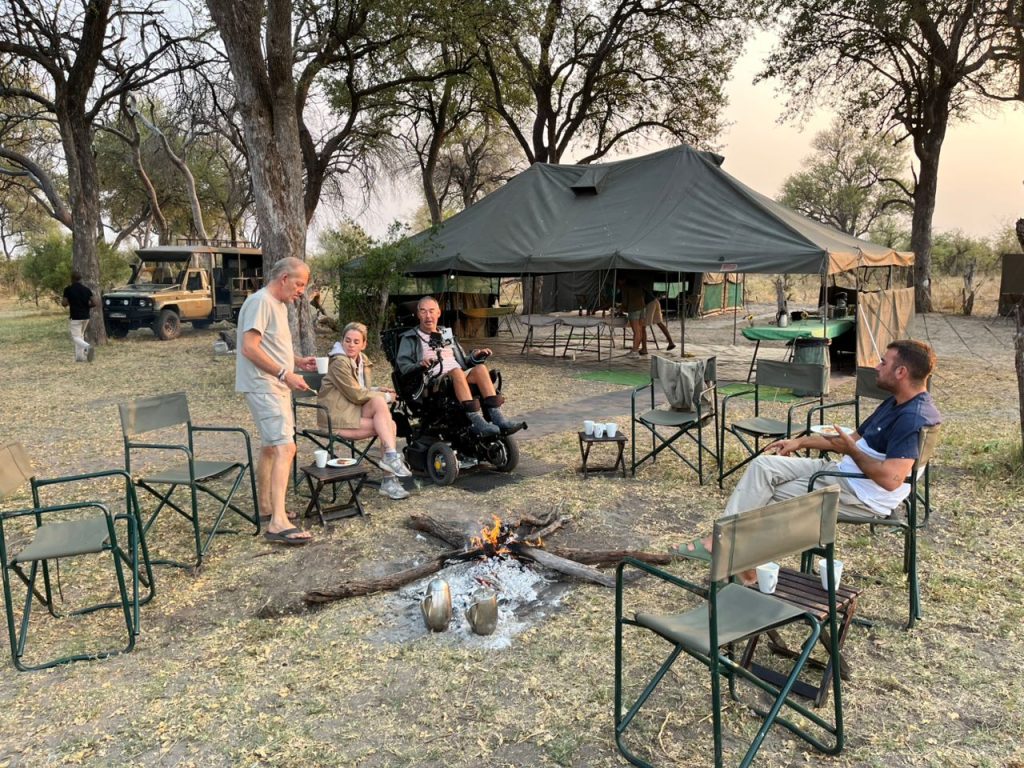
The moment that stays with me most wasn’t a wildlife sighting, though there were extraordinary ones — a leopard draped across a sausage tree, a pack of wild dogs dozing in the shade, elephant herds moving through the floodplains with quiet purpose. It was, instead, an evening in camp, sitting round the fire with a drink in hand, as elephants wandered past in the darkness and lions called somewhere out in the bush. Sophie turned to me, and I could see it on her face before she said anything. These were the moments I’d always loved most about safari — the ones that remind you how small and lucky you are to be alive in a world this wild. And yet, for Sophie, they had simply never been available before. Not like this. Not in the actual wilderness, under canvas, with no walls between you and Africa.
Sophie wrote about the experience for Adventure.com — you can read her full piece here — and her account captures something I couldn’t put into words myself. What she describes is not an adapted version of safari. It is safari. The same lions, the same darkness, the same fire. The same feeling.
The Result
In April 2027 I’ll be leading a small group of six wheelchair users and guests with mobility impairments to Botswana to do exactly this, travelling alongside a Botswana expert field guide. The itinerary takes in three nights at Endeavour Safaris’ wheelchair-adapted mobile camp in Khwai — in the heart of the Okavango Delta — followed by two nights at Savute Safari Lodge, two nights at Chobe Game Lodge on the banks of the Chobe River, and two nights at Palm River Hotel in Victoria Falls. Ten nights, fully accompanied, with the adapted vehicle and guide throughout. The link to the trip is here.
This is not a trip for people who want a comfortable approximation of the wild. It’s for wheelchair users and guests with mobility impairments who want the real thing — and who’ve been waiting, perhaps for a very long time, for someone to make it possible.
Places are limited to six guests. The trip departs April 2027, priced from £8,980 per person. To find out more or to register your interest, get in touch with us at Wild Paths.
Jonny May
Founder
Wild Paths
About the Author:
Wild Paths was founded by me, Jonny May, a passionate Africa specialist with a deep-rooted desire to transform the travel industry. For the past 15 years, I’ve been fortunate enough to travel extensively across Africa. I’ve driven from Cape Town to Cairo, traversed the Sahara while leading camping safaris, and stayed in everything from community huts to the most exclusive private houses on the continent.

More From The Blog
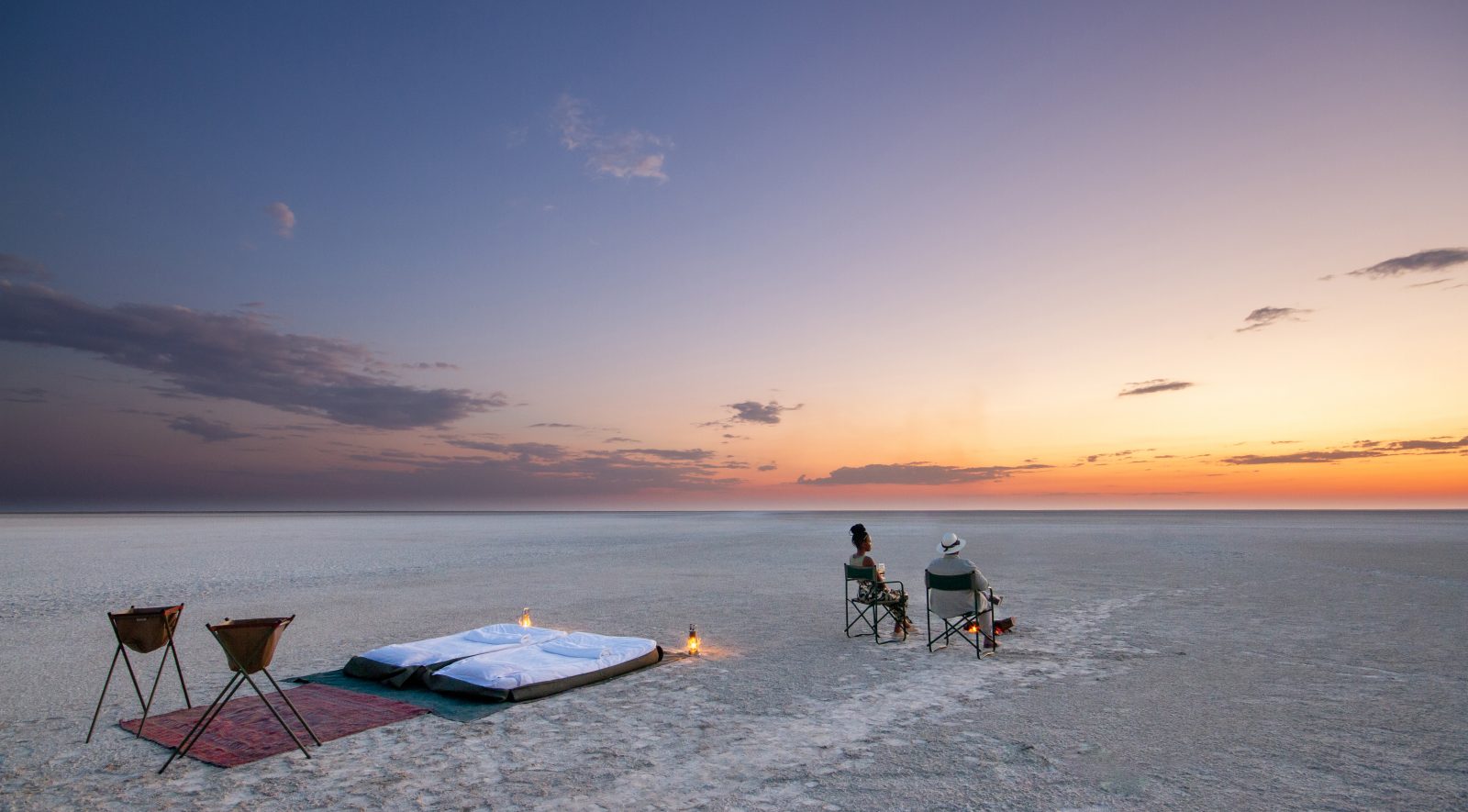
African Safari Packing List
I've driven from Cape Town to Cairo, crossed the Sahara, and slept in everything from remote community huts to private tented camps deep in the Okavango...
Can wheelchair users go on safari?
It's one of the questions I'm asked most often, and the honest answer is: yes. For most of my career in the safari industry, however, the more truthful answer...

Stargazing in Africa: A Guide to the Continent’s Night Skies
I remember the exact moment stargazing in Africa properly stopped me in my tracks. I was at Noka Camp in the Lapalala Wilderness Reserve in South Africa's...