
Kenya Birding Safari

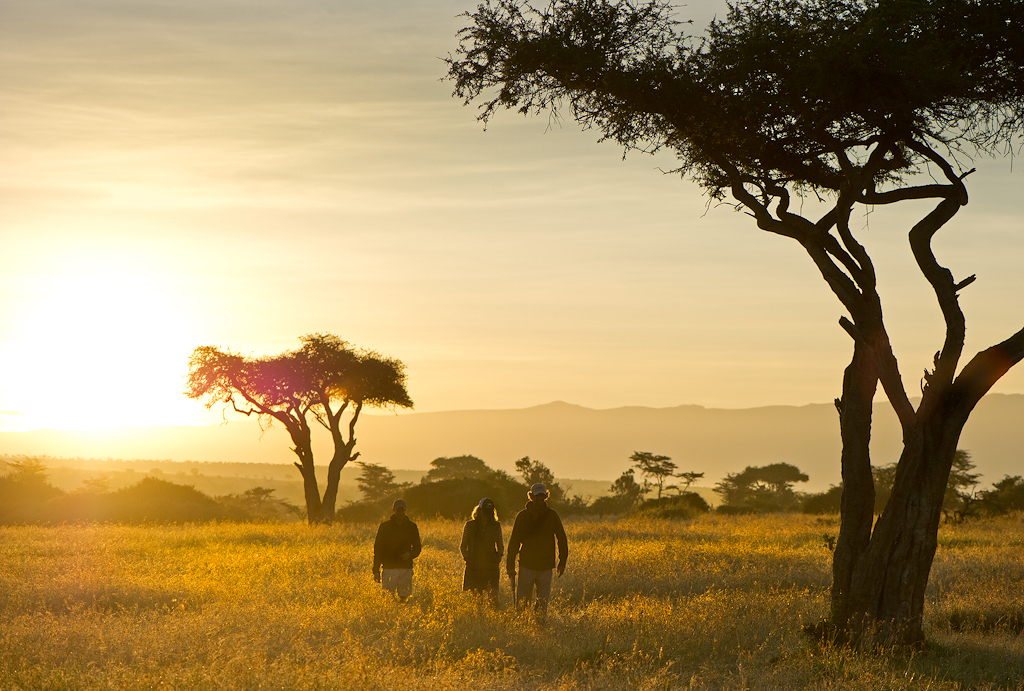
Counting birds at El Karama with Robbie Omuse on a Kenya Birding Safari
Senior guide Robbie Omuse learned his first birds while herding cattle. On eBird’s October Big Day, he led me to 195 species at El Karama in Laikipia on a Kenya birding safari.
The bird that warned the herd
Robbie Omuse learned his first birds with a herding stick in his hand. After leaving school, he walked El Karama’s cattle across the Laikipia plateau. Buffalo were common then. When the oxpeckers started a persistent alarm call, the herders stopped and looked around.
“There were some calls we would never ignore,” Robbie says.
He knew the birds by their Bukusu names, not their English ones. The oxpecker is kumucharia, or kamacharia when there are several. The cattle egret that followed the herd is aileere, a name that describes its white plumage.
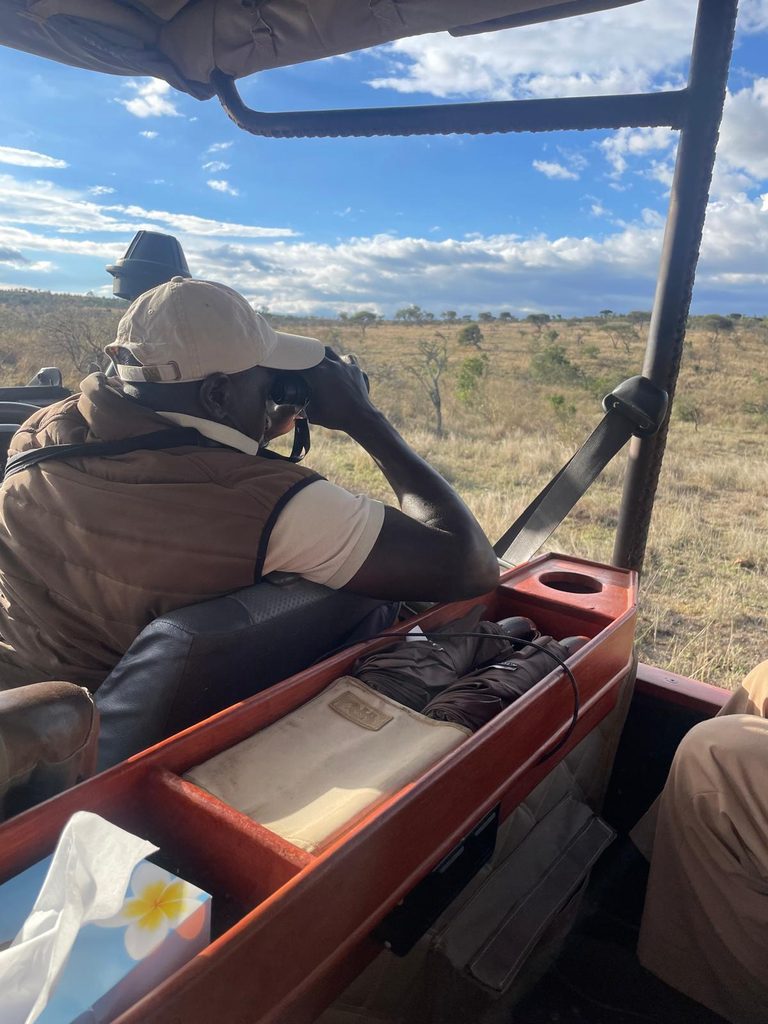
Robbie is now a senior guide at El Karama Lodge. On 10 October 2026 I spent the day counting birds with him for eBird’s October Big Day. By the time he finished, well after dark, we had recorded 195 species.
What is the October Big Day?
The October Big Day is one day of global bird counting, run through eBird, the Cornell Lab of Ornithology’s citizen science platform. Birders everywhere log every species they see or hear on the same date. It falls on the second Saturday of October, which is also World Migratory Bird Day.
Each checklist adds dated, mapped sightings to a shared database used by scientists and conservation groups. Over time the data shows where species live, when migrants arrive and which populations are falling.
Kenya takes part in numbers. In October 2023 Kenyan birders logged 705 species, the highest total in Africa (The EastAfrican). In October 2024 they logged 739, second in Africa behind Tanzania (Nation).
195 species, dawn to after dark
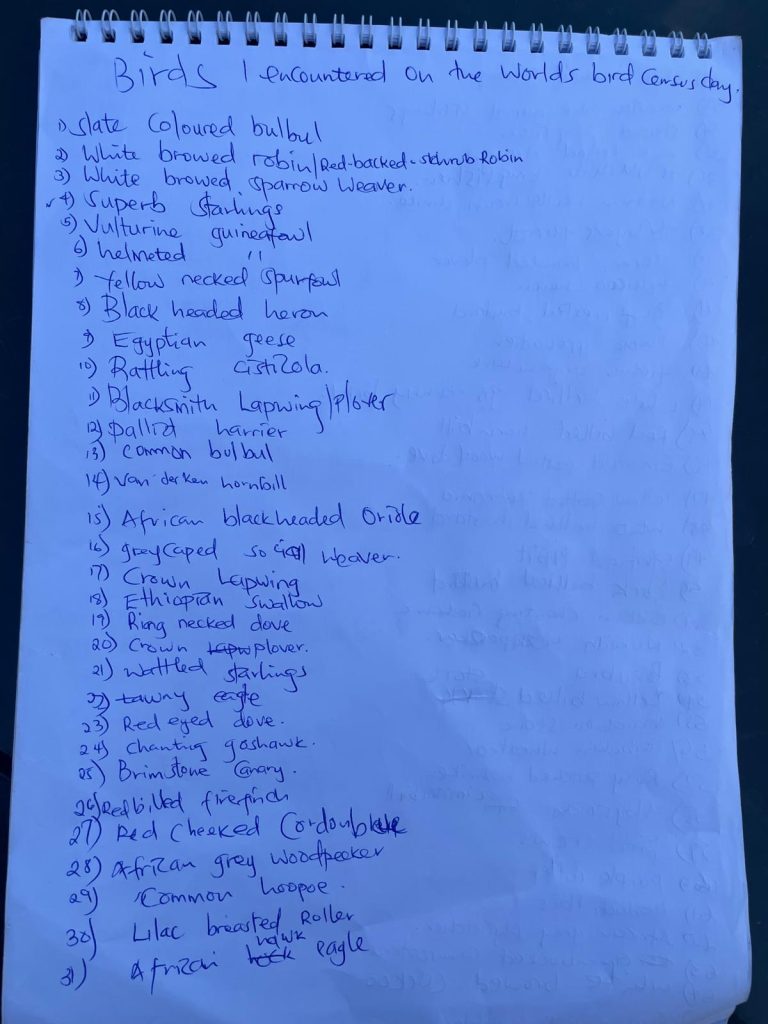
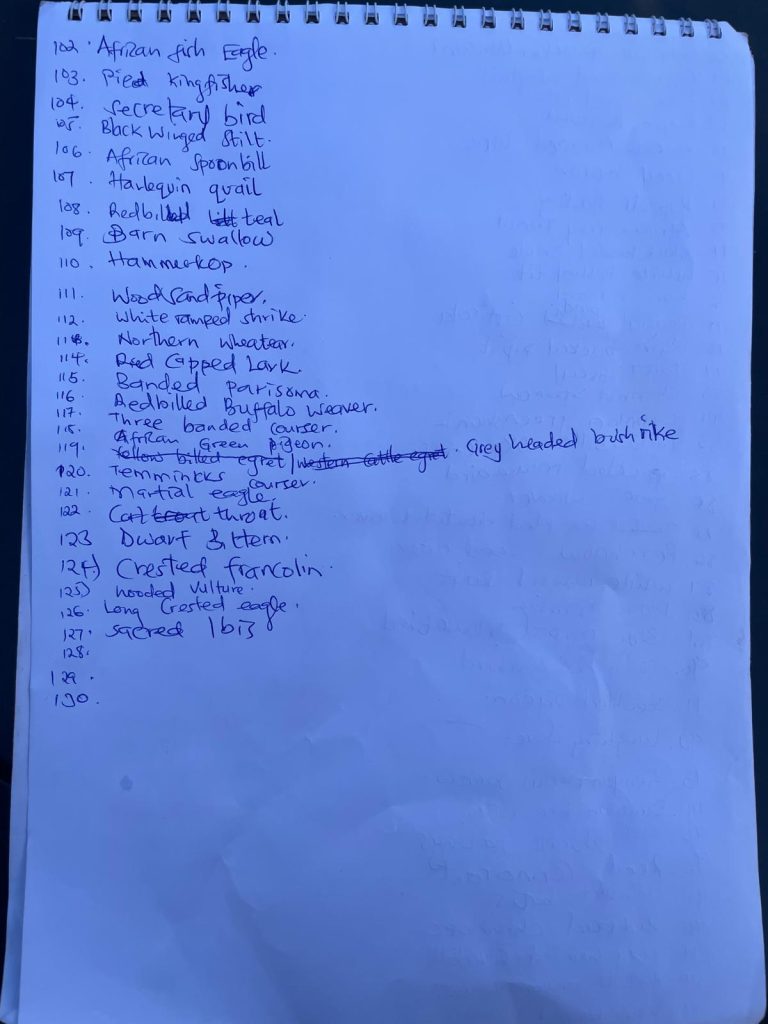
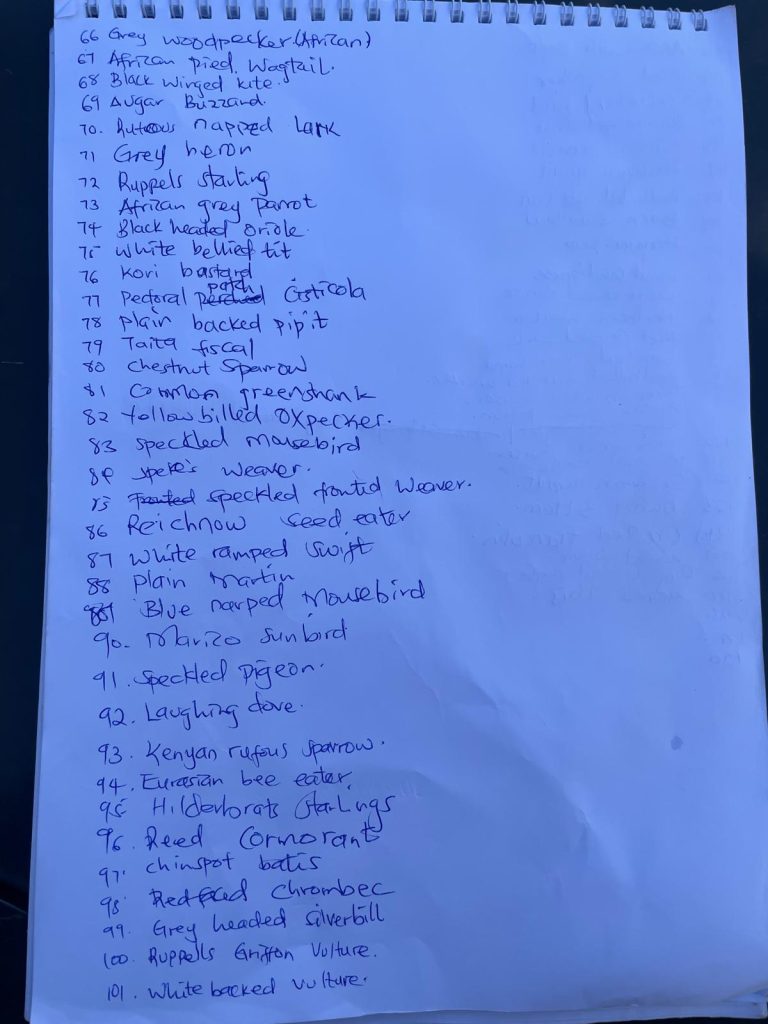
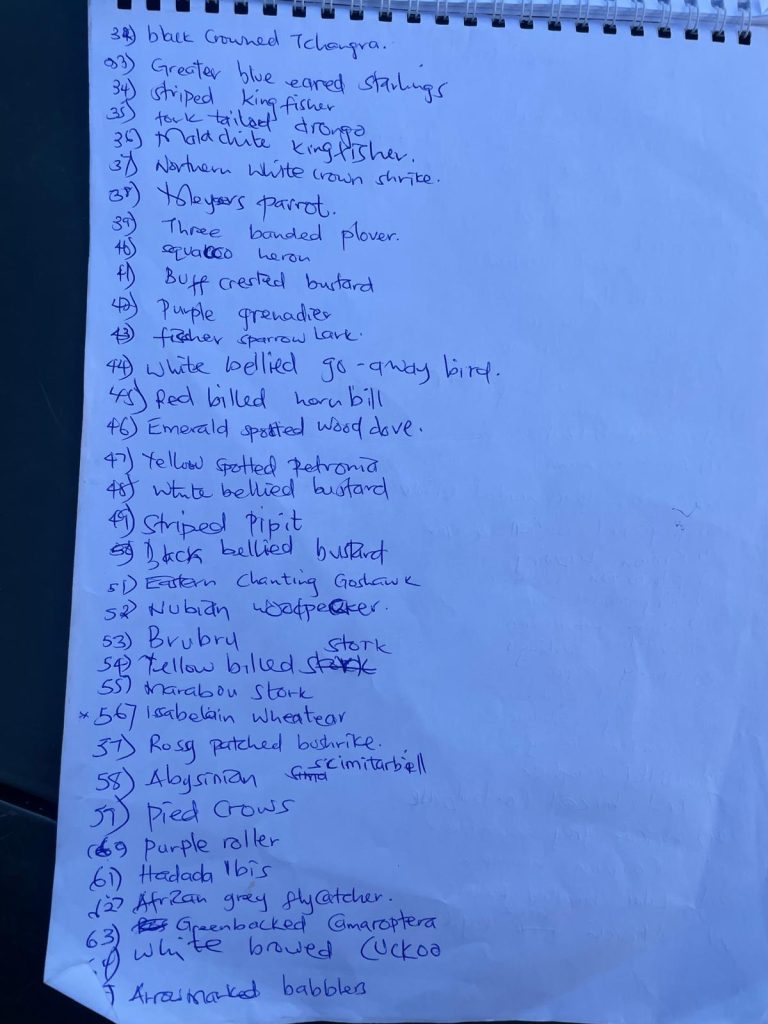
Robbie was already counting when he collected me at 6am. Three of us worked from the vehicle. Robbie logged each sighting in the eBird app. Our second guide (Ambolem) wrote every species by hand in a spiral notebook. I watched, listened and made them stop for coffees g&ts. If you don’t know about G&T’s – this is your cue to book a safari.
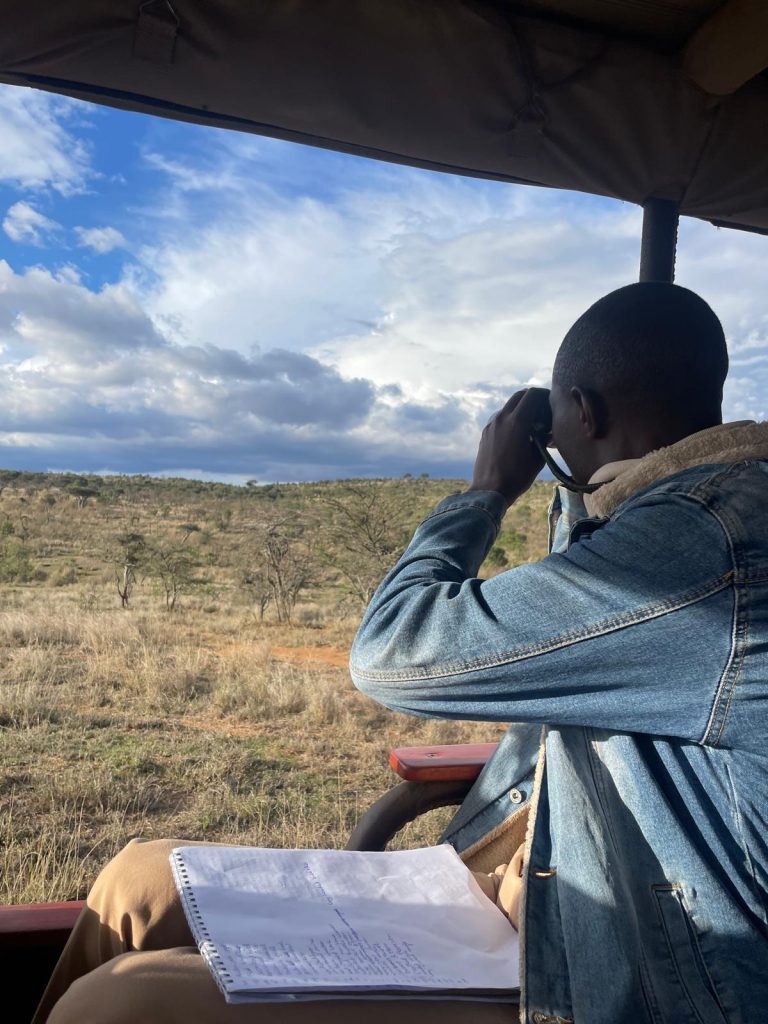
We birded for four hours that morning. We followed the Ewaso Nyiro river, crossed open grassland and checked the dams and waterholes. After lunch we went out again from 4pm until about 8.30pm. By dark, the handwritten list ran to more than 120 species. Many birds came by ear alone, Robbie could hear a bird from a few hundred metres away, tilt his ear and then nail the bird ID. My wife always says I come home from safari with a couple of new man crushes – Robbie definitely fit the man-crush brief. FYI, the brief is: they need to be smarter than me, funny, and do a good job of appearing to like me and make me feel special – In the bush, a well-timed ‘great spot, Jonny’ goes a long way.
Back to the birds
A crested francolin called at first light. A pair of white-browed coucals answered each other in the distance. Slate-coloured boubous and rosy-patched bushshrikes duetted from the thickets. Robbie dropped me back for dinner, which I thought meant the day was over – he sneaked out and bagged a load more! That evening counting thick-knees and more owls. His final total was 195 species. El Karama’s full bird list stands at 432, so we recorded 45% of it in one day.
What we saw
Robbie chose three highlights:
- an African finfoot,
- a dwarf bittern
- a yellow-bellied eremomela.
The African finfoot lives on shaded rivers and slips under overhanging branches at the first disturbance. Few birders see one. Robbie says the El Karama team now finds one on the Ewaso Nyiro about twice a week. They are learning its movements.
The dwarf bittern is a small, secretive heron. Ours flushed from a waterhole into a nearby tree and froze there.
Two spur-winged lapwings gave us something new. Robbie logged them as a first sighting for El Karama.
Vultures and other threatened birds
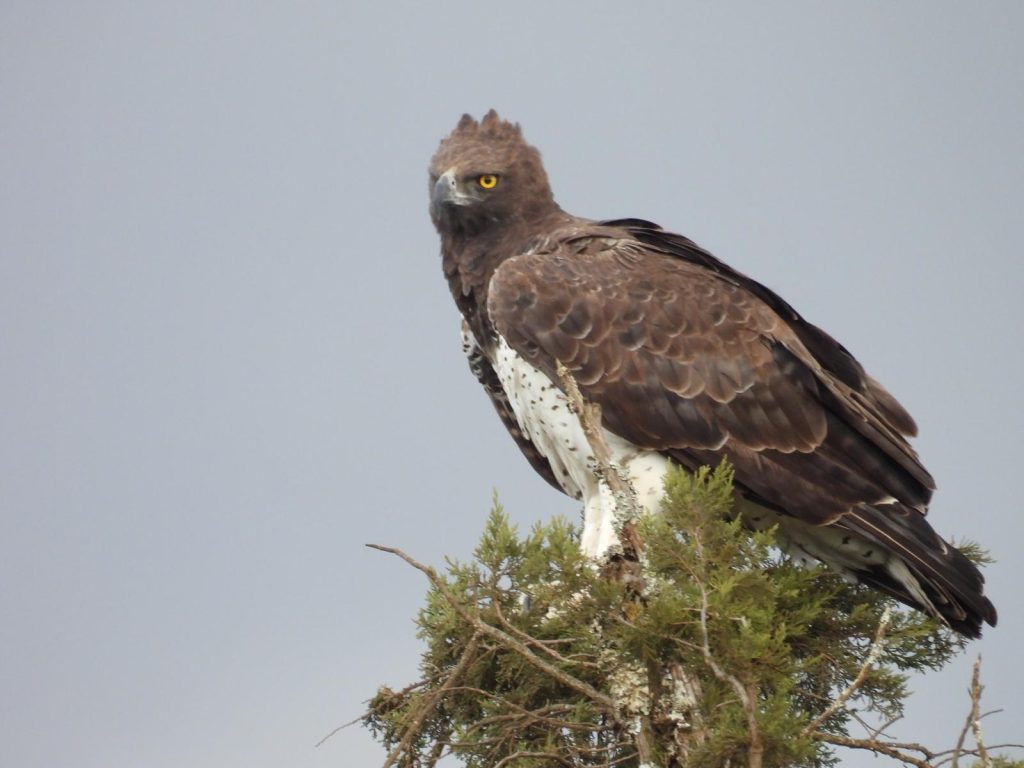
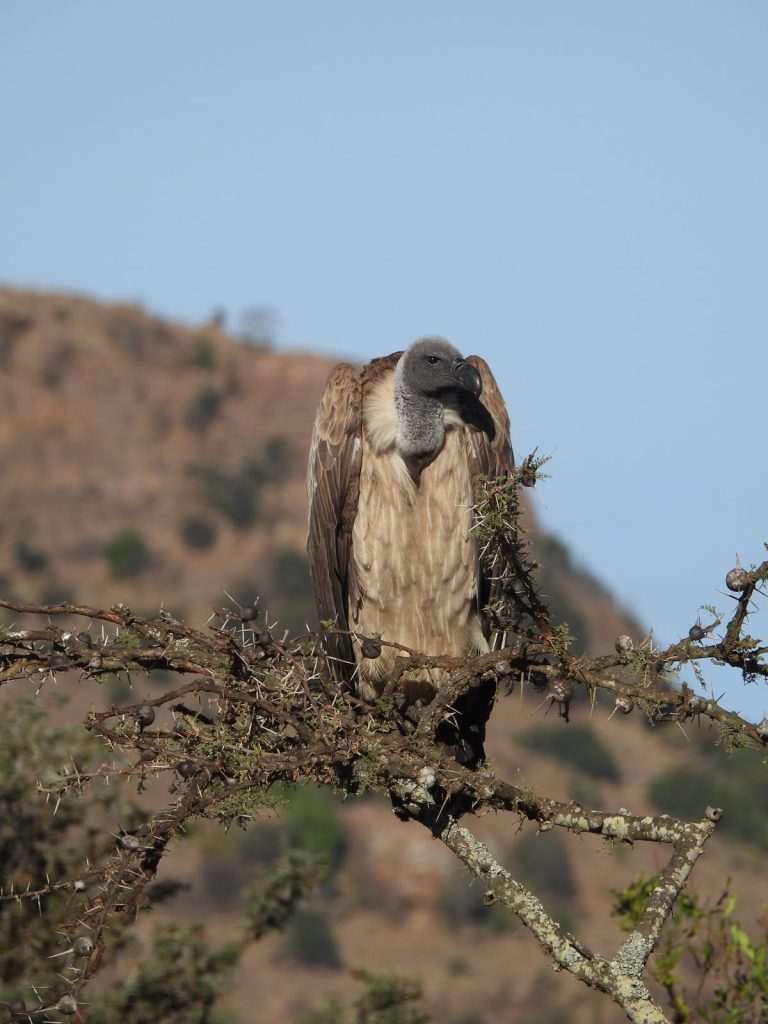
After the rain, five white-backed and three Rüppell’s vultures sat preening in one group of trees. A lappet-faced vulture roosted with them. We also logged hooded vulture. White-backed, Rüppell’s and hooded vultures are Critically Endangered. Lappet-faced is Endangered. Other threatened species on the day included grey crowned crane, secretary bird and martial eagle. A kori bustard, the world’s heaviest flying bird, walked the open grassland. A saddle-billed stork fed in a mud puddle by the long rock.
Migrants with a British connection
World Migratory Bird Day made the migrants a focus. We counted 13 Palearctic species, birds that breed in Europe or Asia and spend the northern winter in Africa:
- European bee-eater, a flock of 12 circling overhead
- Barn swallow
- Garden warbler
- Northern wheatear and Isabelline wheatear
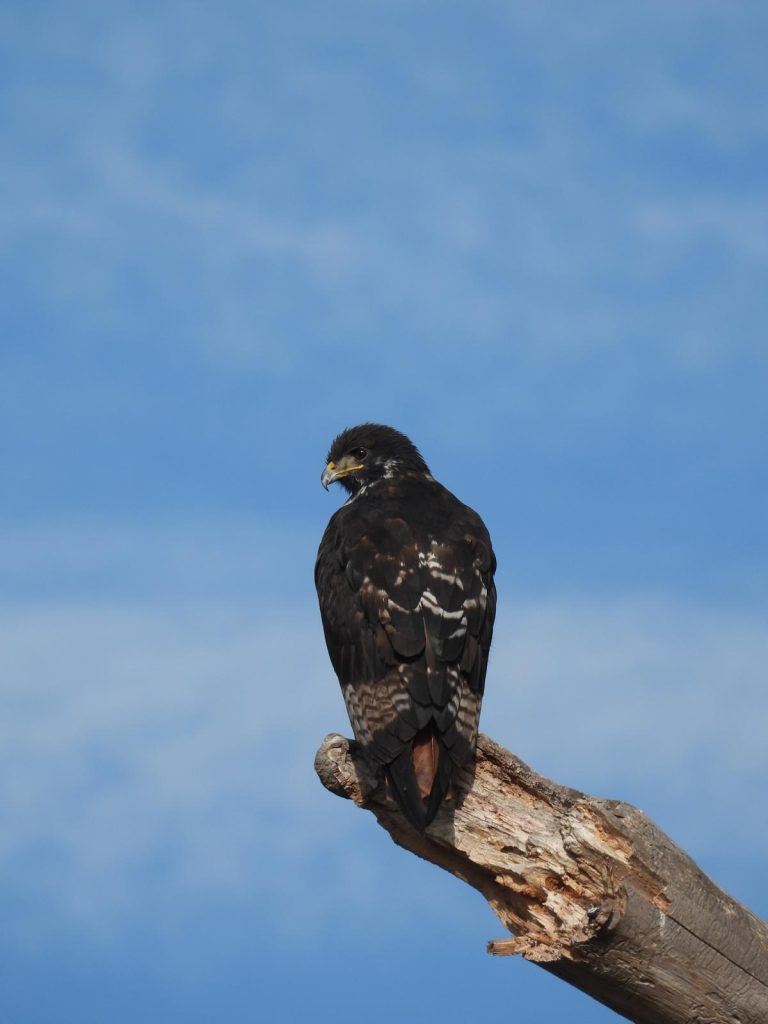
- Pallid harrier, flying low over the grass
- Black stork, alone by the river
- Common greenshank, feeding in the swamp
- Green, wood, common and marsh sandpipers
- Common snipe
Several of these breed in Britain, including barn swallow, garden warbler, northern wheatear, common sandpiper and common snipe. The swallows over the dam may well have spent the summer in Devon. They’re the same birds I pull the car over for at home, so my kids can watch them dive for insects. My kids humour me for about a fortnight each spring. After that, I’m just a man shouting at birds from a lay-by.
Dry-country birds
Laikipia sits on the edge of Kenya’s arid north, and the list shows it. We logged vulturine guineafowl, Temminck’s and three-banded coursers, buff-crested and black-bellied bustards, Hildebrandt’s starling and the Taita fiscal.
From herdsman to senior guide
Robbie was born on El Karama and grew up there. His family is Bukusu, one of the Luhya sub-tribes of western Kenya, and comes originally from Kitale. His parents have cooked for the Grant family, who own El Karama, for more than 30 years. They still do.
He went to school in western Kenya and finished in 2014. In 2015, aged 19, he came home to herd the conservancy’s cattle. The work meant heavy dust, long walks to good grazing, tracking and watching for predators in the midday heat. “It keeps you on your toes,” he says.
Murray and Sophie Grant then moved him to the lodge as a waiter. He guided whenever he could, and later joined the guide team full-time. He learned from the senior guides around him.
Robbie qualified with the Kenya Professional Safari Guides Association (KPSGA) at Bronze level in 2018. He sits his Silver assessment in November 2026. “I didn’t want to rush,” he says. “I wanted to learn and absorb everything first.” Patient, modest and better qualified than me. The man crush was not easing off.
Today he mentors three younger guides. He posts sightings and nature notes to the lodge team’s WhatsApp group. Away from work he fishes and plays football. Of course he does.
Ask him what herding taught him and he answers in two lines: be resilient and consistent; stay focused and enthusiastic. Ask him why birds matter and he talks about the whole system. “They keep the ecosystems balanced, help grow plants, and support human life and health.” Crush status: fully confirmed.
El Karama: a conservancy that counts
El Karama Wildlife Conservancy covers 15,000 acres of Laikipia, along the Ewaso Nyiro river. Murray and Sophie Grant own and run it. Murray was born there.
Building began on the lodge in 2006, largely by neighbours, using stone from the ranch and fallen wood. The conservancy takes no donor funding. Lodge revenue pays for habitat protection, an anti-poaching ranger team and community programmes. A guest’s stay funds that work directly.
Birds are part of the management plan. The team keeps shrub cover for nesting, plants indigenous flowering and fruiting species, and puts up nest boxes. The lodge buildings have eaves designed for nesting swallows and white-rumped swifts. We logged both species in camp on the day.
The Big Day was not a one-off. El Karama runs an annual bird count across the conservancy and counts the lodge compound every three months. Its bird list stands at 432 species, and the landscape has been an Important Bird Area since 2018.
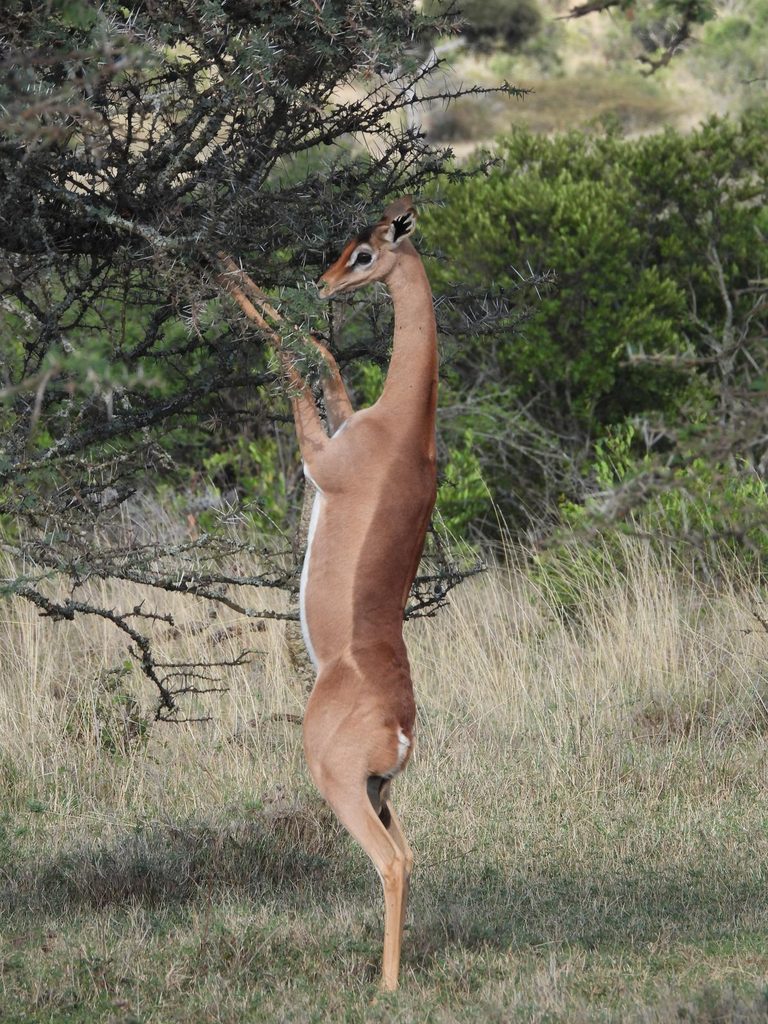
The mammals are just as varied: Grevy’s zebra, reticulated giraffe, gerenuk and Laikipia hartebeest share the plains. El Karama is now home to four white rhino, so Robbie’s old lesson about listening to oxpeckers still applies.
Join the count in October 2027
The October Big Day returns in 2027, expected on Saturday 9 October; eBird confirms the date each year. We will be counting again, and you can count with us. This time we are taking the count to new ground. We are choosing different areas of Kenya for 2027, so each checklist adds records to eBird from places beyond El Karama.
The trip will include:
• A full Big Day with local guides, from before dawn to after dark
• Your sightings logged on eBird, adding to a global conservation dataset
• Morning and evening sessions by vehicle, with time on foot
You don’t need to be an expert. The guides handle identification; your job is to have fun and experience something special.
Keen birders can extend the trip into Kenya’s central highlands, home to four of the country’s endemic birds: Sharpe’s longclaw, Aberdare cisticola, Hinde’s babbler and Kikuyu white-eye.
Please get in touch and we can start planning your Big Bird Day 2027.
We can also book El Karama and Robbie as a private guide if you’d like to head out on a bird watching trip or just spend time with a lovely man and incredible guide.
Birding safari in Kenya: common questions
How many bird species does Kenya have?
More than 1,100, depending on the checklist used. That is roughly a tenth of the world’s bird species, in a country more than twice the size of the UK.
When is the best time for a birding safari in Kenya?
Birding is good all year. From October to April, Palearctic migrants from Europe and Asia add to the resident species. The short rains, from about October to December, bring many residents into breeding plumage.
What is a Big Day?
A Big Day is an attempt to record as many species as possible in one calendar day. eBird runs two global Big Days each year, in May and October. Every checklist adds to a shared scientific database.
Do I need to be an experienced birder?
No. El Karama’s guides identify birds by sight and call. Beginners spot movement and learn as they go. Joining a Kenya birding safari is fun and a great place to learn.
Where is El Karama?
El Karama lies in Laikipia, central Kenya, on the Ewaso Nyiro river. The nearest town is Nanyuki.
Jonny May
Founder
Wild Paths
About the Author:
Wild Paths was founded by me, Jonny May, a passionate Africa specialist with a deep-rooted desire to transform the travel industry. For the past 15 years, I’ve been fortunate enough to travel extensively across Africa. I’ve driven from Cape Town to Cairo, traversed the Sahara while leading camping safaris, and stayed in everything from community huts to the most exclusive private houses on the continent.

More From The Blog

African Safari Packing List
I've driven from Cape Town to Cairo, crossed the Sahara, and slept in everything from remote community huts to private tented camps deep in the Okavango...

Stargazing in Africa: A Guide to the Continent’s Night Skies
I remember the exact moment stargazing in Africa properly stopped me in my tracks. I was at Noka Camp in the Lapalala Wilderness Reserve in South Africa's...